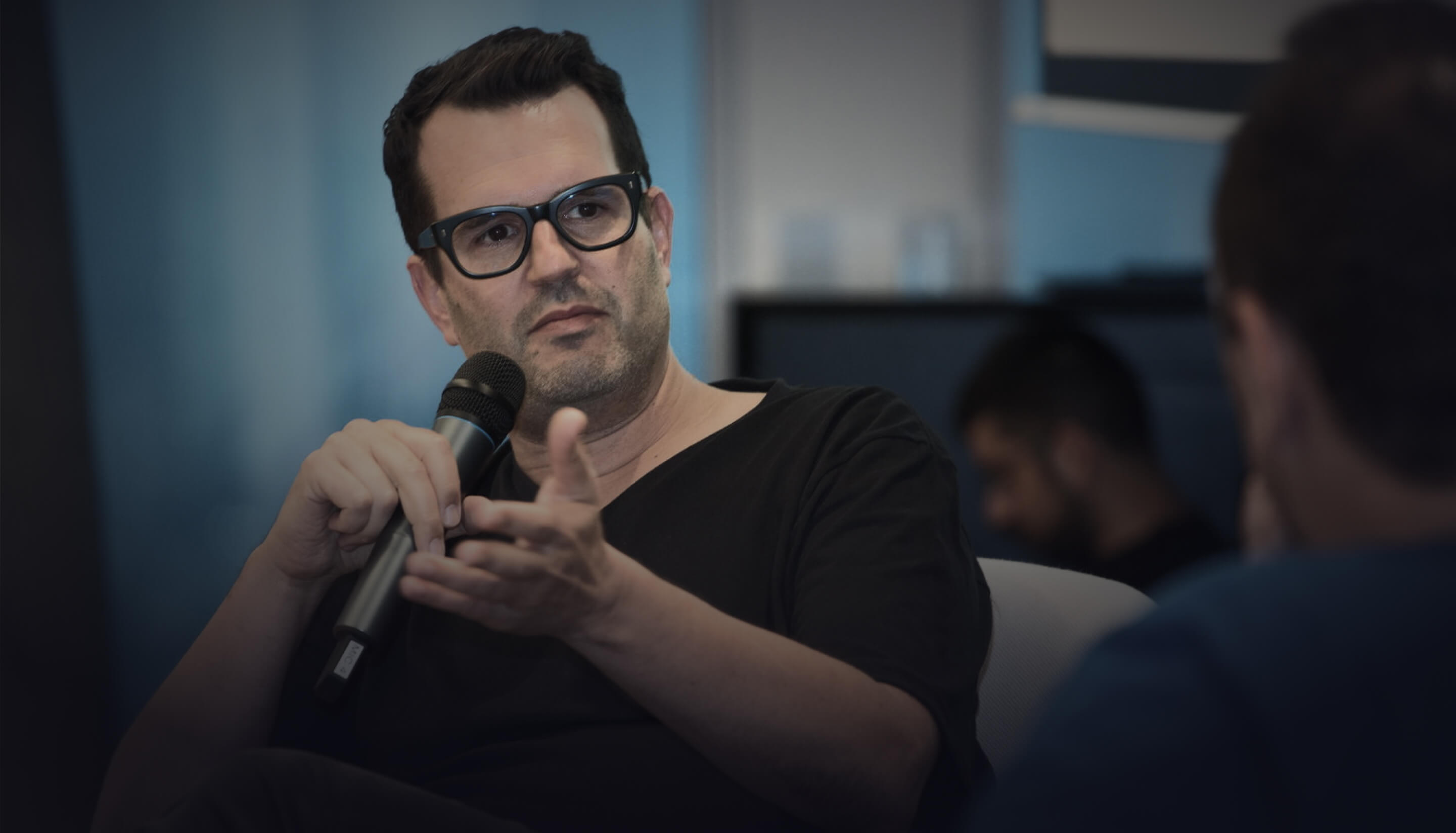
This month at our NYC branch Google SR. UX Researcher Tomer Sharon schooled 150 founders, CEOs and investors on the science and art of UX research.
Many entrepreneurs and startup founders want to learn from their customers about their needs and abilities. They understand that products should solve real problems for people and that they need to have an excellent user experience. Yet when it is time for customer development and learning from users, something changes. Countless entrepreneurs perceive UX research as wasteful and slow and either do it as an afterthought or skip it completely while trusting their own intuitions. This talk defined what UX research is and how it can help startup founders, including reviewing the key concept that makes or breaks any UX research study – the relationship between users’ attitude and behavior.
It’s now been confirmed by credible sources close to the deal that Facebook is in advanced talks to acquire Israel’s Waze for approximately $1 Billion. Some suggest Apple might even be re-bidding, which would make a ton of sense for them considering their disastrous maps hangover. Apple now knows that you must own your own data to be a serious contender in the map wars. I’m sure Google isn’t sitting idle either.
One of the inherent advantages of taking the long road of building up a massive crowdsourced dataset like Waze has, is that you amass a formidable barrier to entry and unique capabilities that only a crowd can power (e.g. near realtime street re-directs).
Regardless of the outcome, the real story for fellow Israel tech founders and CEOs, is the masterful job Noam Bardin has done taking over a startup with a novel technology in search of a business and turning into one of Israel’s first billion dollar consumer Internet/Mobile companies. For full disclosure, Noam is a friend, so I’m admittedly biased but the world is finding out what many of us have known for a while — Noam is one of the preeminent startup CEOs, not only in Israel, but in the world today.
Coincidentally when Waze was a little tech shop called Linqmap, its first investor Magma Venture Partners approached me about taking the CEO job. I was at my second startup Pando at the time but wearing my TechAviv hat took the meeting to see how I could be helpful. I met with Waze’s co-founder and President Uri Levine and suggested a few candidates, including Noam. Linqmap was very much like many of the young Israeli startups I meet at TechAviv — brilliant tech founders, truly innovative idea, and a company DNA overly stacked on the product side while weak on the sales and marketing side. Kind of like those guys you see in the gym with huge chests and arms and tiny chicken-legs. The foundation for business building is shaky at best.
That’s where Noam came in. Bruised but fresh of priceless lessons from the rise and demise of his baby Intercast, Noam proceeded to methodically re-engineer the business of Waze into the powerhouse company it is today. It’s Startup 101 on product, market, team and value creation and we were lucky enough to get first-hand cliff notes from Noam at TechAviv IL in 2010 and TechAviv CA in 2012.
I’m sure how Noam plays this next hand with the giants of tech will be nothing less spectacular, but the inspiration has already taken hold like wildfire among the countless Israeli founders who’ve been told that they can’t produce a billion dollar consumer Internet/Mobile company – and now know that they all can. For that, we thank you man.
There are those who say Israel can’t produce world-class Internet companies. That we are only grooming “feature companies” to be sold to giants overseas. That’s why it was all the more sweet and inspiring to watch Or Yehuda based TechAviv member MyHeritage acquire its massive US competitor Geni.com two months ago. This month at TechAviv’s Israel branch we hear and discuss the remarkable story of the founding and building of one of the world’s leading Internet businesses from its founder CEO, Gilad Japhet.
This is a closed, members-only event but we’ll do our best to get a video up on the site afterwards.
UPDATE: Here’s the presentation of what turned out to be one of the best talks ever given at TechAviv:
“The next 5 years will be the golden age of startup innovation in Israel”. Couldn’t agree more.